Ladder Safety for Roofing Crews — OSHA 1926 Subpart X
Roofing is the industry OSHA cites most often for ladder violations. The requirements aren't complicated — they're just skipped under time pressure.
Request Your Program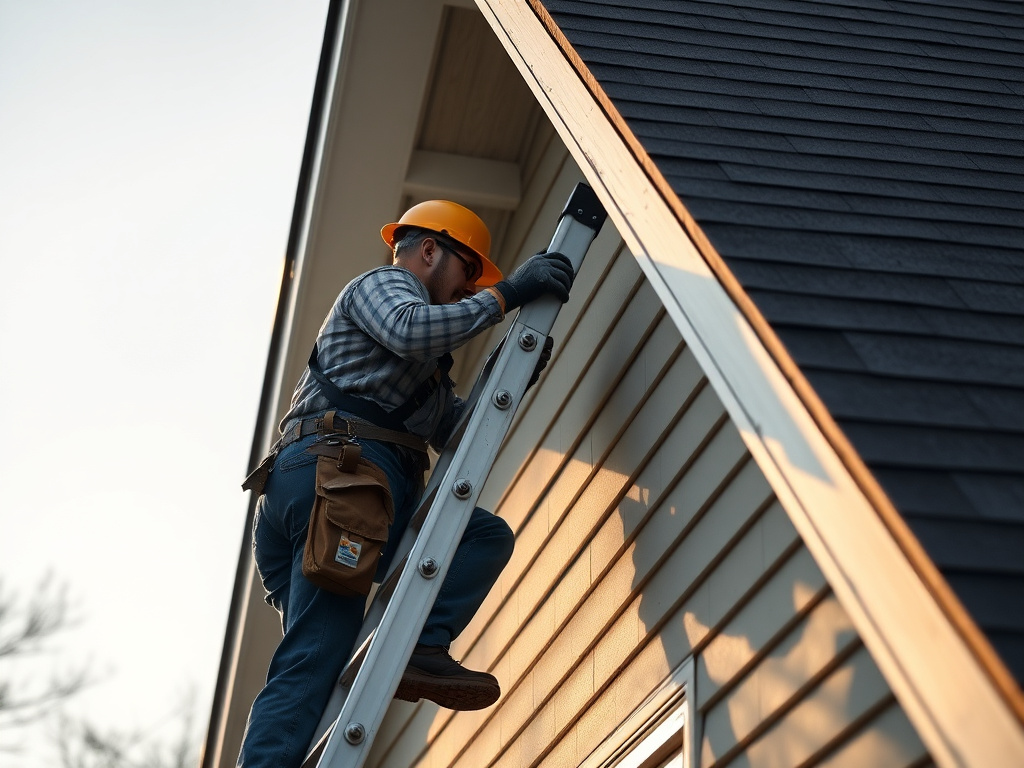
Why ladders show up on nearly every citation list
Stairways and ladders in construction are governed by 29 CFR 1926 Subpart X (1926.1050–1926.1060), with 1926.1053 setting the core design and use requirements. Ladders in the FY2025 OSHA Top 10 most-cited standards logged 2,405 violations nationally — and roofing contractors are consistently the leading industry cited under that standard, because roof access almost always starts with an extension ladder.
Manufactured wood ladders that meet ANSI A14.1 and metal ladders that meet ANSI A14.2 are treated as compliant with the standard's load requirements — the failure point on most jobsites isn't the ladder itself, it's how it's set up and maintained day to day.
Setup fundamentals every crew should enforce
A few practices account for the overwhelming majority of ladder-related roofing incidents and citations: extending the ladder far enough above the roofline that a worker has something solid to hold while stepping on or off, securing the ladder against displacement (tying off, footing, or an approved stabilizer) before anyone climbs, and pulling any ladder with a bent rail, cracked rung, or missing foot out of service immediately rather than "for the rest of the day."
Setting the correct climbing angle matters more than most crews think — a commonly used field convention, echoed by both OSHA guidance and NIOSH, is roughly a 4:1 ratio (for every 4 feet of working height, the base sits about 1 foot out from the wall). Too shallow an angle and the ladder is prone to sliding out at the base; too steep and it's prone to tipping backward.
Daily inspection is the cheapest fix
A pre-use ladder check takes under a minute and catches the defects that actually cause falls: loose or missing rungs, corroded or bent side rails, worn non-slip feet, and hardware that's been improvised or repaired in the field instead of by the manufacturer. Building this into the same pre-shift routine as a fall-protection check — not a separate, skippable form — is what makes it stick.
Key facts
- Governing standard
- 29 CFR 1926 Subpart X
- Core design/use rule
- 29 CFR 1926.1053
- FY2025 ladder violations
- 2,405 nationally
- Top-cited industry
- Roofing contractors
Related program areas
FAQ: Ladder Safety
29 CFR 1926 Subpart X (Stairways and Ladders), sections 1926.1050 through 1926.1060, with 1926.1053 setting the core ladder design and use requirements.
Far enough that a worker has a secure handhold when stepping on or off the roof — a commonly used field standard is at least 3 feet above the landing point. Confirm the exact figure against your ladder manufacturer's instructions and your written program.
Roof access on most jobs starts with an extension ladder, so exposure is constant and the setup often happens under time pressure at the start of a shift — a defective or poorly footed ladder is one of the fastest things for an inspector to spot.
- What OSHA standard covers ladders on a construction site?
- How far above the roofline should an extension ladder extend?
- Why does roofing lead ladder-violation citations nationally?
Get your ladder safety program documented
Plain-language, OSHA-aligned, and built for your crew.