How Many Roofers Die From Falls Each Year? What the Data Actually Shows
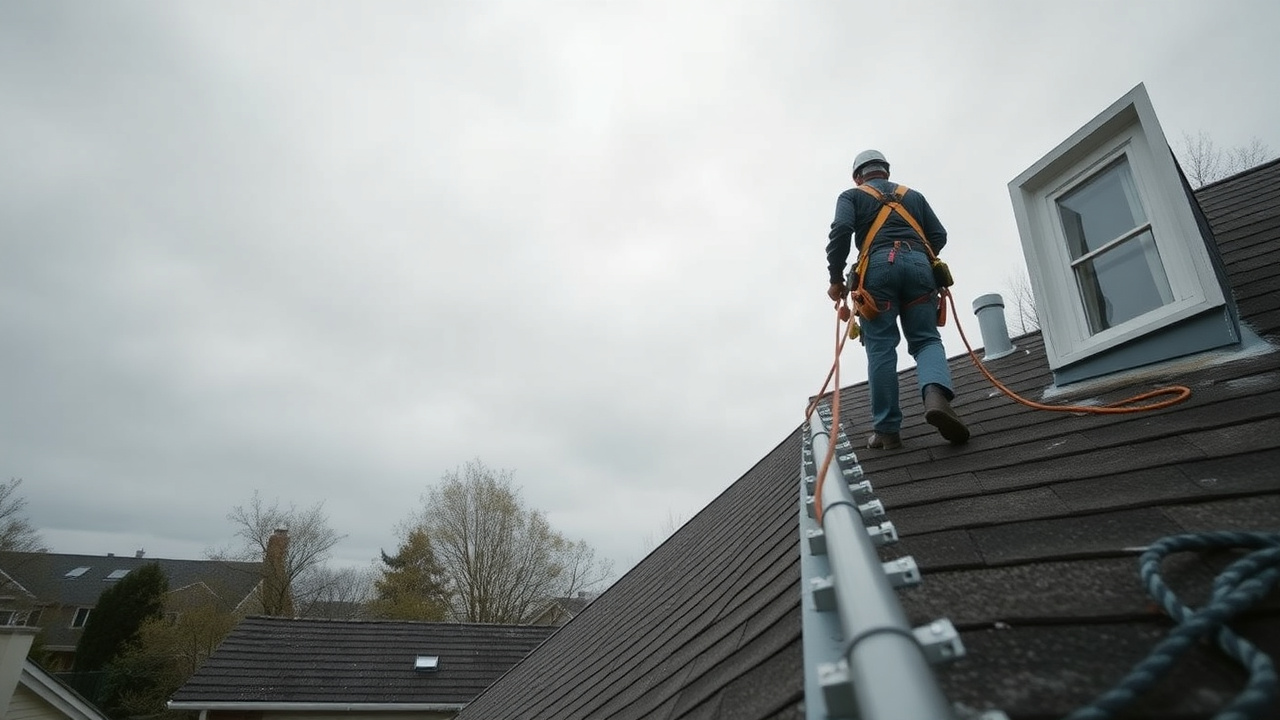
Roofing shows up near the top of nearly every list of America's most dangerous jobs, and the reason is almost entirely one hazard: falls. According to BLS Census of Fatal Occupational Injuries (CFOI) data, roofers (BLS occupation code 47-2181) had a fatal injury rate of approximately 48.7 per 100,000 full-time-equivalent workers in 2024 — down from roughly 51.8 per 100,000 in 2023, but still consistently among the highest rates of any occupation the government tracks. Roofing has ranked the third-deadliest U.S. occupation by rate in recent years, behind only logging workers and fishing/hunting workers.
Falls dominate the cause-of-death breakdown
The rate alone doesn't tell the full story — what matters just as much is what's causing those deaths. Falls, slips, and trips account for roughly 84% of roofer occupational fatalities in recent BLS data, dwarfing every other cause combined. That concentration is exactly why OSHA's enforcement priorities, and the guidance on this site, are built so heavily around fall protection rather than spread evenly across every possible jobsite hazard.
Two numbers, two different questions
If you go looking for roofing fatality statistics yourself, you'll run into a common source of confusion: BLS publishes figures both by occupation (people whose job title is "roofer," regardless of which industry employs them) and by industry (everyone employed by a roofing contractor business, NAICS code 238160, regardless of their specific job title). These are genuinely different measurements, not conflicting versions of the same one — an industry-level count can differ from an occupation-level count in the same year because it includes office staff, estimators, and other roles at roofing companies alongside people actually working on roofs, while an occupation-level count includes roofers employed outside the roofing industry proper.
When you see two different "roofing fatality" numbers for the same year cited in different places, this is almost always why — check which measurement (occupation vs. industry) the source is actually using before assuming one figure is wrong.
What OSHA has done in response
In April 2023, OSHA launched its first-ever National Emphasis Program focused specifically on falls (CPL 03-00-025), effective that May. It authorizes compliance officers to open an inspection whenever they observe a worker at height, including incidentally — not just during a scheduled visit. Fall protection has also been OSHA's #1 most-cited standard, across every industry, for 15 consecutive years, and roofing contractors are consistently the leading industry represented in that count.
The takeaway for a roofing safety program
The data points to one clear conclusion: if a roofing company's safety program only has the budget and attention to genuinely nail one thing, it should be fall protection — guardrails, safety nets, personal fall arrest systems, and warning lines used correctly, every time a crew is 6 feet or higher on a roof. Everything else on this site (ladder safety, PPE, heat illness prevention, roof-edge and skylight protection) matters, but the fatality data is unambiguous about where the risk concentrates.